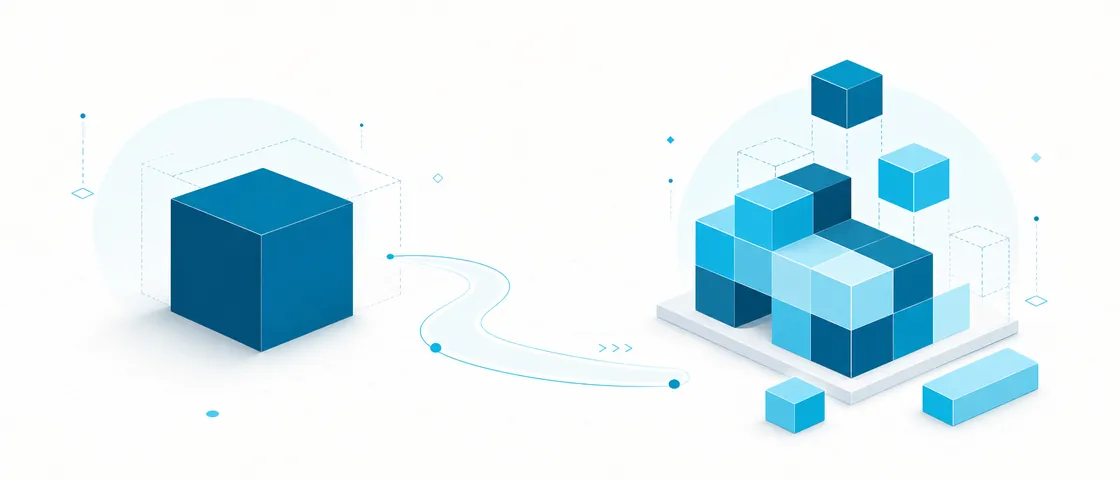
Most businesses in Abu Dhabi are already doing digital marketing in some form. A boosted post here, a month of Google Ads there, a stretch of regular Instagram activity that faded when things got busy. The money is being spent. What is usually missing is the system that makes the spending compound instead of evaporate.
This article explains the difference between marketing activity and a marketing strategy, and what a connected system looks like in practice.
Why scattered marketing burns budget
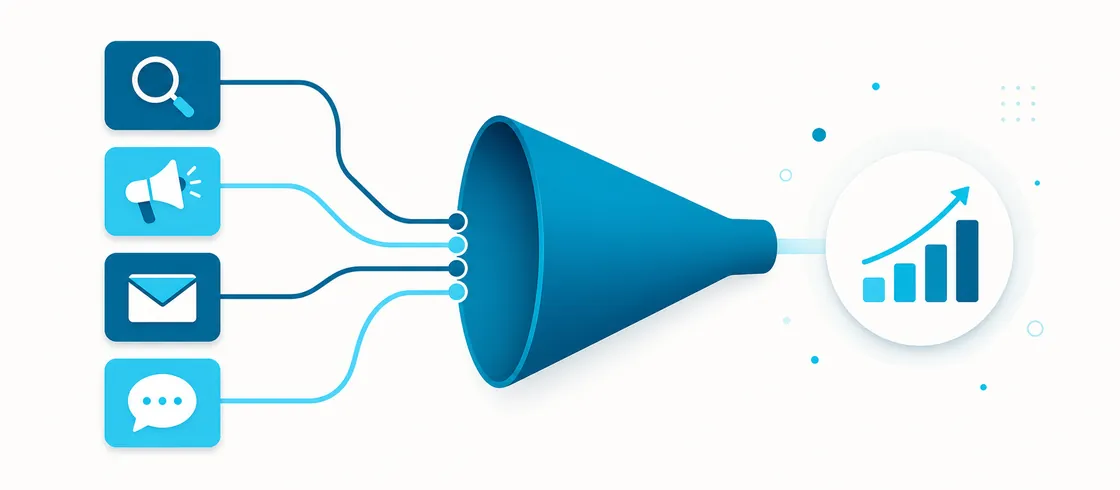
Marketing channels do not work in isolation, and treating them separately creates leaks that are invisible until you look for them:
- Ads drive visitors to a homepage that does not continue the ad's promise, so they leave.
- A brand gets discovered on Instagram, but its Google presence is thin, so the follow-up search finds a competitor instead.
- Enquiries arrive, get a single reply, and are never followed up again because nothing automates the follow-up.
- Nobody can say which channel produced last month's customers, so the budget is set by feel.
None of these are channel failures. They are gaps between channels, and no amount of extra ad spend fixes a gap that sits after the click.
The anatomy of a working system
Search: capturing demand that already exists
Every day, people in Abu Dhabi search for exactly what you sell. Ranking for those searches is the highest-intent traffic available, because the customer started the conversation. That takes technical SEO on a fast, well built site, content that answers real buyer questions, and local signals like an optimised Google Business Profile. Unlike ads, rankings compound: work done this quarter keeps producing next year.
Paid: buying speed while the organic assets grow
Google and Meta ads deliver traffic immediately, which makes them the accelerator of the system, not its foundation. The discipline is in the details: campaigns built around genuine buyer intent, ad creative tested rather than assumed, and every campaign pointed at a landing page built to convert that specific audience. This is also where marketing and web development meet: sending paid traffic to a weak page is the most expensive mistake in digital marketing.
Social: building an audience you can reach again
Social media rarely closes a sale on its own, and judging it that way misses its role. Done consistently, it keeps your brand present between purchase decisions and gives prospects a reason to trust you before they ever enquire. In this market, that often means content in both English and Arabic, planned in a calendar rather than improvised.
Email: the channel you own
Every platform charges you to reach the audience again except your own list. Welcome sequences, follow-ups on enquiries that went quiet, and retention campaigns for past customers routinely produce some of the cheapest revenue in the whole system, because the hardest step, earning the contact, is already done.
Measurement is the strategy
The practical difference between a strategy and activity is that a strategy is measured. That means tracking configured properly before budget flows, so you know which channel produced each enquiry; a dashboard you can open any time rather than a monthly PDF; and decisions made on cost per enquiry and cost per customer rather than likes and impressions. Once those numbers exist, budget allocation stops being a debate. You put money where the customers are provably cheapest, and the same data feeds smarter decisions across the business, which is where marketing overlaps with analytics.
Sequencing: what to fix first
- Foundation. A fast website with clear pages for what you sell, and tracking that works. Everything else multiplies from here.
- Capture. Search visibility for the terms your buyers use, including local Abu Dhabi intent.
- Accelerate. Paid campaigns once there is somewhere worth sending the clicks.
- Retain. Email and remarketing to stop paying repeatedly for the same audience.
Businesses often want to start at step three because it feels fastest. It is also how budgets disappear. The order matters more than the total spend, and a smaller budget in the right sequence regularly outperforms a large one pointed at a weak foundation. We go deeper on each channel on our digital marketing service page.